

Introduction: Why AI Audio Translation Matters More Than Ever
In today’s hyper-connected digital world, audio content has become one of the most powerful communication formats. Podcasts, interviews, webinars, tutorials, and online lectures are consumed by millions of people every day. But despite this massive growth, one major challenge still limits how far audio content can reach: language barriers.
Creators, educators, businesses, and media teams all face the same problem—how do you make your audio accessible and understandable to people who don’t speak the original language? Traditionally, the solution required human translators, professional voice actors, or manual recording sessions. These methods are expensive, time-consuming, and often inconsistent.
This is where AI audio translation changes everything. With powerful AI audio translator tools, creators can instantly translate spoken content into multiple languages with impressive accuracy. It preserves the tone, clarity, emotion, and pacing of the original speaker—making the translated audio sound natural and engaging.
AI audio translation is no longer an experimental concept. Today, it is a practical, professional, and cost-effective solution that allows anyone—from individual creators to global organizations—to share content without language limitations.
What Is AI Audio Translation?
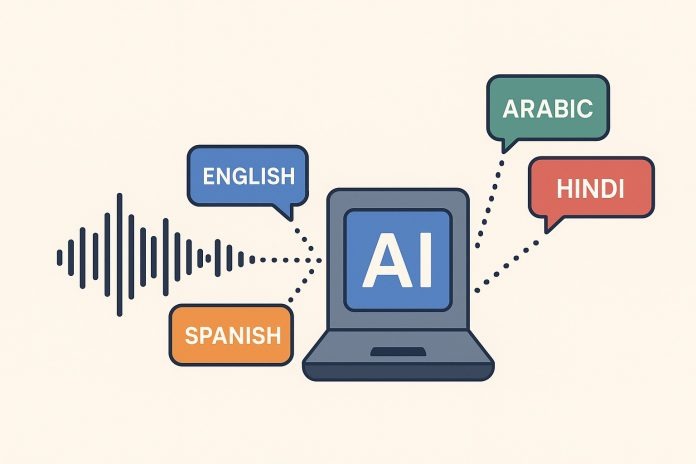
AI audio translation is the process of using artificial intelligence to convert spoken audio from one language into another. It works by:
- Listening to the audio
- Transcribing it into text
- Translating it into the chosen language
- Converting the translated text back into speech
Modern AI translation platforms use advanced speech recognition and natural language processing to ensure the translated audio sounds natural, flowing, and emotionally aligned with the original. Tools like Free AI Text-to-Speech Generator make the final voiceover sound smooth, realistic, and human-like.
What makes AI translation remarkable is its ability to handle:
- Accents
- Pacing differences
- Emotional emphasis
- Domain-specific vocabulary
- Technical terminology
This means creators can use AI audio translation for everything—from casual podcasts to technical corporate training—and still achieve high-quality results.
How AI Audio Translation Works (Simple Explanation)
Even though AI audio translation is highly advanced, the process is easy for users:
- Upload your audio file
The platform processes formats like MP3, WAV, or video audio tracks.
- AI transcribes your speech
Using speech recognition, your voice becomes accurate text.
- The system translates the text
You choose the target languages—Spanish, Arabic, French, Japanese, etc.
- AI generates a natural voiceover
Using text-to-speech technology, the translated content turns into a realistic voice.
- Final audio export
Download or integrate into your podcast, video, webinar, or learning module.
This automated process eliminates manual transcription, translation, and re-recording—saving enormous time and cost.
Key Features of AI Audio Translation Tools
Modern AI audio translation platforms come with powerful features, including:
1. Real-Time Translation
Instantly convert live or pre-recorded audio into multiple languages—ideal for webinars or live sessions.
2. Multiple Voices and Accents
Choose voices that match your target audience’s culture, gender preference, and accent.
3. Tone & Emotion Preservation
AI analyzes the speaker’s tone and emotional delivery, ensuring the translated voice matches the original meaning.
4. Multi-Language Support
Translate into dozens of languages simultaneously with consistent quality.
5. Integration With Multimedia
Easily use translated audio with videos, podcasts, online courses, and presentations.
These features make AI audio translation a powerful tool for creators working on global content.
Expanded Benefits of AI Audio Translation
AI audio translation gives creators and businesses several major advantages:
✔ Break Language Barriers
Reach listeners around the world without creating separate recordings for different languages.
✔ Save Time & Resources
Traditional translation requires long recording sessions and manual editing. AI cuts this process from days to minutes.
✔ Cost-Effective Scaling
Instead of hiring multiple translators and voice actors, AI handles everything under one platform.
✔ Consistent Audio Quality
AI ensures the same tone, energy, and clarity across all languages.
✔ Boost Engagement & Retention
Listeners understand content better when it’s in their own language.
✔ Supports Accessibility
People with limited English proficiency can easily follow educational or professional content.
Expanded Use Cases: Where AI Audio Translation Creates Impact
AI audio translation can be used across a wide range of industries. Here are the most impactful applications:
1. Podcasts
Creators can offer versions of their shows in multiple languages, attracting global listeners and increasing audience size.
2. Webinars & Online Events
Businesses and coaches can deliver multilingual webinars without hiring interpreters.
3. E-Learning & Online Courses
Students worldwide can access course materials in their native languages, improving comprehension and learning outcomes.
4. Corporate Training
Companies with international teams can provide consistent training materials across all regions.
5. Marketing & Advertising
Localized audio campaigns lead to higher engagement and improved customer trust.
6. Media & Entertainment
AI makes dubbing for films, documentaries, and video games faster and smoother.
7. Customer Support Systems
Brands can translate audio FAQs, support messages, or tutorials for global users.
8. Religious, Motivational & Community Messages
Speeches, sermons, or motivational audio can reach diverse audiences without language restrictions.
9. Social Media Creators
Instagram Reels, TikTok voiceovers, YouTube Shorts—all can be translated instantly.
These expanded applications make AI audio translation a core technology for global content distribution.
NEW SECTION (Requested): Step-by-Step Guide – How to Use Our AI Audio Translator Tool
Below is a unique step-by-step guide for this article (different from the first article):
Step-by-Step Guide to Using the AI Audio Translator
- Upload Your Audio File
Drag and drop your audio or import it directly from your device or cloud storage.
- Select the Original Language
The AI automatically detects the language, but you can manually select it for accuracy.
- Choose Target Languages
Pick one or multiple languages from the list—Spanish, French, Arabic, German, Chinese, etc.
- Enable Emotion & Tone Matching
Turn on the “Emotional Sync” option to maintain tone and pacing.
- Review the Auto Transcription
Make quick edits if needed—correct names, dates, or technical terms.
- AI Generates the Translated Voiceover
The system automatically creates realistic voiceovers for each language.
- Preview & Adjust the Selected Voices
You may choose a male or female voice, change accent, or adjust speed.
- Download or Export
Save the final translated audio file or integrate it directly into your video or podcast.
This guide ensures your audience gets a smooth multilingual experience.
How AI Audio Translation Enhances Accessibility
Accessibility is a major advantage of AI-powered translation. Multilingual audio helps:
- Non-native speakers understand complex topics
- People with limited reading ability rely on high-quality voiceovers
- Students worldwide access equal learning opportunities
- Brands connect authentically with diverse cultural audiences
By removing language restrictions, creators make their content truly global.
Future of AI Audio Translation
The future holds even more advanced capabilities:
- Real-time multilingual dubbing during live broadcasts
- Hyper-realistic emotional voice clones
- Industry-specific translation models (medical, legal, engineering)
- Automatic accent conversion
- AI-driven lip-sync audio for videos
Those who adopt AI translation now will stay ahead in the rapidly evolving global content industry.
Conclusion
AI audio translation is transforming how creators, educators, and businesses share content across borders. By combining AI audio translator tools with text-to-speech technology, users can produce multilingual audio that is:
✔ natural
✔ accurate
✔ emotionally aligned
✔ cost-effective
✔ globally accessible
In a world where audiences expect inclusive and multilingual communication, AI audio translation is no longer optional—it is an essential tool for anyone who wants to expand their global reach.