

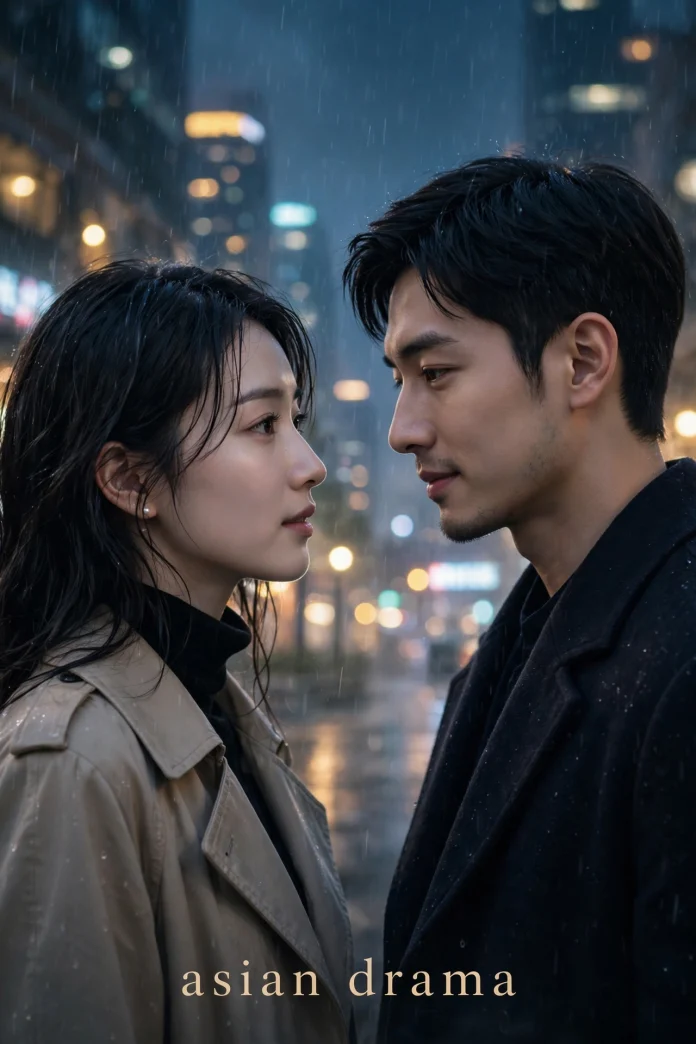
Fans of Korean, Chinese and Japanese dramas know that a series can win them over before a single line of dialogue. A costume change that signals a character’s shift in status, a color palette that turns cold when a relationship breaks, a rooftop set that becomes the emotional home of the story. These visual choices are carefully designed, and more and more of that design language is finding its way into video games.
Game studios in Asia and beyond are borrowing directly from the look of dramas, webtoons and historical epics. Understanding how that happens says a lot about both industries, and about the work of the concept artists who sit at the start of every visual decision.
The webtoon to screen pipeline
Many recent dramas began as webtoons. Titles such as Itaewon Class and True Beauty moved from vertical-scroll comics to live action, and viewers followed closely how faithfully hairstyles, outfits and settings were translated. That same process, taking a 2D illustrated character and deciding what they look like in a new medium, is the everyday job of a game concept artist.
When a webtoon or drama becomes a game, or when a game borrows its style, the team has to answer the same questions a drama production does. Which features make the character recognizable? What must stay exactly the same, and what can change to suit the new format? A drama costume designer and a game concept artist are solving closely related problems.
Costume as storytelling
Historical dramas in particular treat clothing as narrative. Rank, loyalty, mourning and rebellion are all expressed through fabric, color and silhouette. Viewers learn to read these signals across many episodes.
Games use the same tool, often more aggressively. A character’s armor or outfit may change as they level up, join a faction or unlock a new story arc. Concept artists design these progressions in advance, usually on a single sheet that shows each stage side by side. The goal is the same one a costume department has: every version should feel like the same person at a different moment in their story.
Color scripts and mood
Drama cinematographers often use deliberate color schemes to guide emotion. Warm, saturated tones for early romance, desaturated blues for separation, a return of warmth for reconciliation. Fans who rewatch favorite series frequently notice these patterns only the second time.
Game art teams build what they call color scripts for the same reason. Before levels or scenes are built, concept artists paint small frames showing how the palette should shift over the course of the game. Those frames guide lighting artists, environment artists and even the user interface team, so that the whole experience carries a consistent emotional arc.
Faces, expressions and the idol effect
The polished, expressive faces associated with many Asian dramas and idol culture have had a visible influence on character design in games, especially in mobile titles and gacha games. Large, readable expressions, carefully styled hair and fashion-forward outfits help characters stand out on small screens and give players a reason to collect them.
Designing those faces is harder than it looks. A concept artist has to create expressions that read at a glance, stay on-model across many poses and survive the move into 3D or animated 2D. Studios usually produce full expression sheets for each main character: joy, anger, sadness, surprise, and the subtler looks that carry romance or rivalry.
Sets and locations
Dramas turn ordinary places into landmarks. Convenience stores, school rooftops, palace courtyards and neighborhood restaurants become places fans want to visit. Game environments work the same way. Players remember the town square, the tea house or the training ground where key moments happened.
Environment concept art begins with mood paintings and simple layouts, then moves to detailed designs that show materials, props and lighting. For games inspired by historical dramas, artists often research period architecture, textiles and decorative motifs, then decide how far to stylize them for the game’s tone.
Why studios outsource concept work
Concept art is the stage where a game’s identity is set, and demand for it comes in waves. A new project, a new season or a major expansion can require dozens of character and environment designs in a short window, followed by quieter periods. For that reason, many studios combine a small in-house art direction team with external concept artists or dedicated partner studios.
The arrangement works best when the internal team owns the vision and the style guide, and the external artists bring speed and range. A clear brief, reference boards and a fixed number of review rounds help both sides stay aligned. For readers curious about how game companies structure that relationship, this practical overview of concept art outsourcing walks through how studios brief, review and scale external concept work.
What makes a strong game concept
Good concept art is not just attractive. It has to be buildable. A striking costume that cannot be modeled, rigged or animated within the project’s budget will be simplified later, often losing what made it special. Experienced concept artists design with the rest of the pipeline in mind: clear silhouettes, materials that can be textured, accessories that will not clip through the body when the character moves.
Drama productions know this constraint well. A costume sketch has to become a garment an actor can move, fight and sit in for long shooting days, and a set design has to fit the studio space and the budget. Game concept art faces its own version of those limits, only the actor is a rig and the set is a level that must run smoothly on the target device.
That is also why production-ready concept sheets look different from fan art. They include turnarounds, callouts, material notes and color codes. They are less about a single beautiful image and more about giving every downstream artist what they need.
The shared language keeps growing
The relationship between dramas and games now runs in both directions. Some games take visual cues from popular series, and some series borrow from game aesthetics in their fantasy and action sequences. Webtoons feed both. For fans, it means the style they love on screen is increasingly something they can step into and play.
For the artists behind it, the craft is the same whether the destination is a drama set or a game world: understand the story, design characters and places that carry it, and make sure every visual choice can survive the trip into production.