

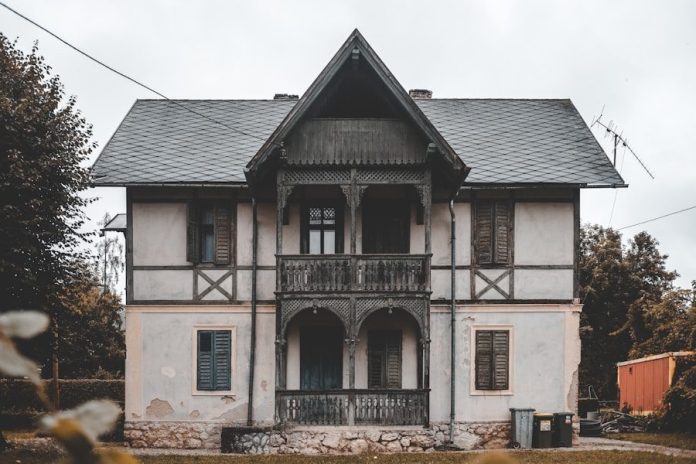
High heating bills are often linked not only to utility rates but also to the condition of the house itself. Most homes that are more than 30 years old lose heat through the roof, walls, windows, basement, and other vulnerable areas. Owners regularly pay more for gas and electricity than they should simply because the house operates inefficiently.
The Financial Drain of Poor Insulation
In older Ontario homes, attic insulation levels often do not exceed R-15. Under modern standards, this figure should be at least R-60. A fourfold difference means that heat escapes through the roof almost without resistance. You are paying to heat air that leaves the house within minutes.
Walls and basements in homes built in the 1960s and 1970s are usually poorly insulated, which is a common issue. Over time, materials settle, voids appear, and cold spots form, which forces the heating system to work harder. This directly increases monthly expenses.
Upgrading the Building Envelope for Long Term Gain
A building’s airtightness is more important than it may seem at first glance. Up to 25% of heat escapes through gaps around windows, doors, and pipe penetrations. Simply replacing finishes does not solve this problem. It is necessary to think about reconstructing the building envelope.
A major house renovation makes it possible to approach this systematically. It allows problematic areas to be opened, outdated insulation to be replaced, air leaks to be eliminated, and a continuous thermal barrier to be restored. As a result, the load on the climate system decreases, and comfort in the rooms becomes stable.
Why Modern Engineering Beats Old Systems
Older mechanical systems, even with normal insulation, have an AFUE of around 60–70%. This means that 30 cents of every dollar spent simply goes up the flue in the form of exhaust gases. Modern equipment reaches 95% and higher. Replacing an old unit with a condensing boiler provides immediate savings.
The condition of the ductwork and the distribution of heat throughout the house also play an important role. In older buildings, ducts may be leaking, which causes warm air to escape into floor assemblies and service areas instead of reaching living spaces in the required volume. That is why it is worth carrying out a professional audit of the mechanical systems, which will help identify these losses and eliminate them during the renovation stage.
Starting Fresh with a Sustainable Design
It is worth understanding that not every old house makes sense to modernize. In some cases, the cost of reinforcing the structure and working on the foundation, walls, and engineering systems exceeds the benefit of the savings. In such situations, it is more reasonable to consider not a partial update, but a full new house built based on modern Net Zero standards.
New construction makes it possible to establish the right logic of the house from the start and to choose quality materials, modern membranes, and engineering solutions with low energy consumption. This creates a thermos-like envelope that keeps the house cool in summer and warm in winter at a minimal cost.
Such a house requires fewer resources for heating and cooling, operates more steadily, and in the long-term costs less to maintain. In addition to these advantages, such a house has a substantial difference in market value.
Conclusion
You may not even notice how an old house costs significantly more to operate. That is why investing in energy efficiency is a way to protect your money from the constant rise in utility rates. It is undeniable that an old house consumes additional funds, while the choice between renovation and new construction should be based on calculations of long-term benefit.