

DIY outdoor projects often stall before the first shovel hits the soil. The problem is rarely ambition; it is clarity. A homeowner can describe a “modern backyard with less lawn” and still disagree—with a partner, a neighbor, or a contractor—about what that phrase should look like on their slope, fence line, and sun pattern. Sketches help, but many people do not draw. Inspiration boards help, but they are not anchored to a real property. That is where AI-assisted outdoor planning stops being a novelty and starts being a communication tool.
Why outdoor design is harder than it looks
Unlike interior rooms, yards are not rectangular stages. They arrive with drainage habits, mature trees you may not want to remove, property setbacks, and microclimates that change from the patio to the far corner. DIY designers are not trying to become landscape architects overnight; they are trying to make better decisions before materials are bought and beds are torn out. The most expensive mistakes in landscaping are usually not aesthetic disagreements. They are misunderstandings about scope: what stays, what changes, and what the planting plan is actually proposing.
What DIY designers need from an AI workflow
A practical outdoor AI workflow should do four things well:
- Start from reality—your photograph, not a generic stock garden.
- Respect zones—front yard goals differ from side-yard constraints and pool-adjacent priorities.
- Encode local plausibility—at least enough to steer plants and materials toward what could make sense in your region, even if it is not a replacement for a site visit.
- Produce legible outputs—images that other people can interpret, not just “green prettiness.”
When those pieces align, AI becomes less about instant perfection and more about iterative empowerment: you explore faster, compare directions, and refine in plain language.
How AI Yard Design Studio supports the DIY path
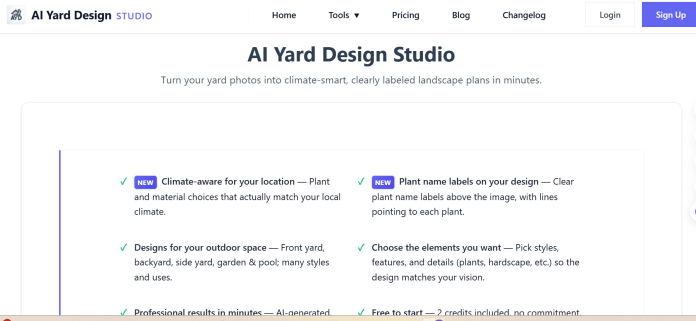
AI Yard Design Studio approaches residential outdoor work through a structured, photo-grounded generator. You upload a yard image, choose the outdoor “room” you are designing—such as a front yard, backyard, side yard, a garden-focused retreat space, or a pool area—and then layer preferences so the model is not guessing blindly. Rather than relying on one long prompt, you can combine a primary direction (style or functional emphasis) with optional landscape elements and custom notes. That matters for DIY users because constraints are where projects live: narrow side yards, dog traffic, HOA-visible front facades, shade from a neighbor’s tree, or a drainage low spot that cannot become a pond every spring. The platform also encourages location-oriented context so suggestions lean toward climate-aware planting and material tendencies. This does not replace local expertise, soil tests, or code checks—but it reduces the “tropical fantasy garden in a cold climate” failure mode that makes many AI renders feel untrustworthy. Another DIY-friendly detail is plant labeling: designs can include clearer plant identification cues so a visual is not only motivational but also explainable. When you can name what you are looking at, you can ask better questions at a nursery, compare maintenance realities, and avoid the awkward moment when a contractor says, “Which plant palette did you mean?” For users thinking beyond a single residential zone, there is also a pathway oriented toward larger landscape-style projects—useful when the question is less “refresh my patio bed” and more “shape a bigger outdoor program” before professional detailing begins.
Iteration as confidence, not failure
Empowerment is not getting a perfect image on the first click. It is being able to say, “Keep the path, change the planting rhythm,” or “More screening along the fence, fewer high-maintenance annual moments,” and move the concept forward without restarting from zero. The best DIY outcomes treat AI outputs as draft visibility, not construction documents. They are for alignment: between household members, between you and a landscaper, between a rough budget and a realistic phased plan.
Stay honest about limits
AI cannot automatically verify grading, utilities, tree protection rules, or permits. It cannot promise plant availability at your local nursery next week. The responsible way to use these tools is to treat them as decision support—accelerating exploration and reducing miscommunication—while still hiring licensed professionals when safety, liability, and property value are on the line.
Conclusion: empowerment is shared understanding
DIY outdoor design succeeds when people can see the same future before money is spent. AI yard design —as a category and as a concrete workflow—helps move homeowners from vague goals to labeled, photo-grounded concepts that respect real yards and real climates. If the future of home improvement includes more informed amateurs, it will not be because AI replaces craft. It will be because AI makes craft easier to collaborate with—one clear outdoor concept at a time.