

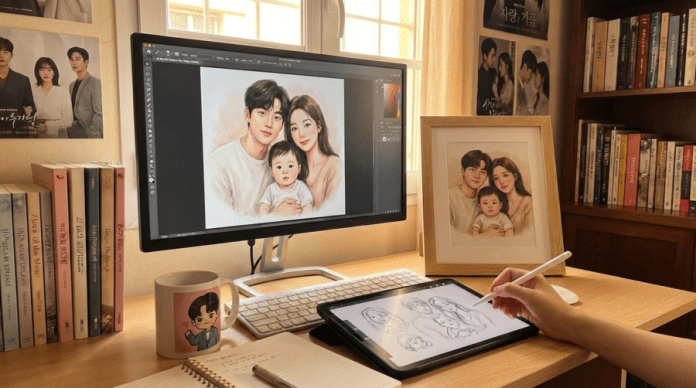
For most of us, a truly great drama isn’t just something to tick off a watchlist or a way to kill an hour after a long shift. Whether you’re melting over a sweet K-drama romance, getting lost in the epic scale of a C-drama, or finding yourself in the quiet, messy “slice-of-life” moments of J-drama fandom, these stories feel like actual places we visit. We don’t just hit play; we move into these worlds for a while.
The real magic happens when the audience stops being just viewers and starts being part of the story. They’re diving into deep threads to debate why a character made a certain choice or dreaming up “what-if” scenarios that the writers missed. This massive emotional stakes-holding is the real fuel behind drama fandom creativity. It turns the lonely act of watching a screen into a loud, shared adventure where the story keeps breathing long after the final credits.
Why Drama Fans Love to Imagine “What Happens Next”
Anyone who’s finished a 16-episode marathon knows the “drama blues” is a very real thing. Saying goodbye to a cast you’ve spent weeks with feels like losing actual friends, which is exactly why we’re so obsessed with imagining the after. We catch ourselves wondering: Did they ever actually move to that house by the sea? Did they finally fix things with their family? What does their life look like a decade later?
In the K-drama fan community, this shared imagination is everything. It’s not just that we’re greedy for more episodes; it’s that we need emotional closure. By picturing domestic lives, career wins, or just quiet morning coffee scenes for our favorite leads, we’re keeping the story alive. This kind of “future-building” is how fans heal from a finale and hold onto that emotional buzz the show gave them.
From Fanfiction to Visual Fantasy: The Evolution of Fan Creativity
Back in the day, if you had a “what if” theory, you wrote it down. Fanfiction was the go-to outlet. But things have changed. While a good story is great, there’s something visceral about actually seeing your ideas come to life. We’re seeing a huge pivot toward people trying to visualize drama characters through new digital lenses.
Visualizing the Next Generation of Beloved Characters
For many fans, imagining the children of a beloved couple isn’t about realism; it’s about preserving the atmosphere of the show. It is a way to celebrate the chemistry between the leads and explore their legacy. This type of fan-made drama art turns a series finale into a poetic continuation where the viewer becomes a co-author of the story’s future.
Visual experiments play a massive role in this creative process. For instance, a fan might generate an ai baby photo to catch a glimpse of what the child of a “Slow Burn” couple might look like, turning simple curiosity into digital storytelling. Through these visuals, the K-drama fan community keeps the vibe of the show fresh, effectively turning every “The End” into a “To Be Continued.”
How AI Tools Inspire Drama Fans to Create Their Own Art
Not everyone can pick up a stylus and draw a masterpiece. Luckily, technology has finally caught up with our imagination. You used to need years of technical training to make decent drama fan art, but today, AI is stepping in as a creative partner rather than a replacement. It’s a tool that helps a fan take a “vibe” that’s been stuck in their brain for weeks and turn it into something they can actually look at.
For the J-drama fandom or any other niche group, an AI fan art generator is basically a high-tech mood board. It gives people who don’t call themselves “artists” the power to play with lighting, mood, and character vibes. This shift has totally opened up the doors, letting way more people add their voice to the fandom’s visual world. It makes the whole community feel way more diverse and alive.
Using AI Baby Generator as a Creative Playground for Drama Fans
In the middle of all this experimentation, plenty of fans have treated the AI baby generator as a total creative playground. It’s less about the tech and more about the play. Fans are using these creative tools for drama fans to mess around with genetics and aesthetics, seeing how a couple’s features might blend in an alternate timeline.
It’s a perfect way to build out alternate universe drama art. You can practically map out an entire family tree for a sprawling historical epic or a tiny modern rom-com. It’s low-stress, it’s fun, and it’s a great way to unwind. There’s a tiny thrill in seeing a familiar jawline or a certain look pop up in a generated image—it feels like a secret wink to the characters we grew to love.
Why Creating Fan Art Is a Form of Emotional Connection
Making drama fan art is an act of devotion. It’s how we process the heavy emotions a series leaves behind. Whether it’s a tragic ending that needs a “fix-it” visual or a happy one we just want to celebrate, art is the medium. Character visualization AI helps fans deepen this connection by making the imaginary feel tangible.
Beyond the personal, this art is a social bridge. Sharing AI art for fans on Instagram sparks instant connections. It’s a way of saying, “I loved this couple as much as you did.” This constant exchange is what builds the K-drama fan community, turning a global audience into a tight-knit circle of friends who share the same dreams.
Conclusion: A New Way to Enjoy Drama Culture Beyond Watching
The world of dramas is no longer limited to what’s on the screen. Through K-drama fan creativity and a bit of modern tech, the audience has stepped into the role of co-author. We aren’t stuck with just the script or the director’s cut anymore.
Using an AI fan art generator or other creative tools for drama fans is ultimately about fueling our imagination. It’s a way to keep that spark alive, to relax, and to find fresh ways to appreciate a story. As we continue to visualize drama characters in these new ways, we prove that a great story never really ends—it just moves from the TV screen into our own creative hands.