

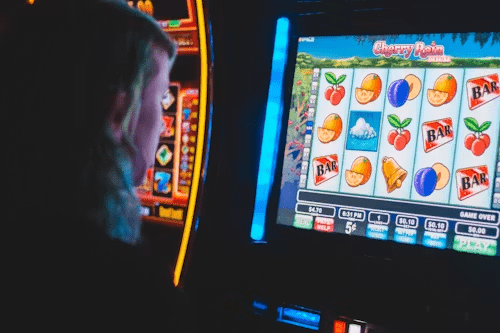
Opening a modern online gaming platform can feel less like entering a single casino and more like stepping into an entertainment hub. Slots, table games, sports markets, live-dealer rooms, promotions, and payment options may all compete for attention at once. The real challenge is not finding something to click. It is understanding what each part does, what the numbers mean, and how to avoid confusing entertainment with dependable income.
That distinction matters when looking at Winbox or any similar all-in-one gaming service. The appeal goes beyond the “drama” of a last-second sports result or a bonus round. These platforms combine game variety, account tools, rewards, and real-money outcomes in one place. Used thoughtfully, they can be treated as paid entertainment in which prizes are possible. They should not be treated as a predictable way to make money.
What an All-in-One Gaming Platform Actually Offers
Online gaming was once more fragmented. Sportsbooks handled matches, casino sites concentrated on table games, and slot platforms maintained separate catalogs. Many services now bring those experiences under one account.
For users, the convenience is obvious. The more useful question is whether the platform makes each category understandable. A typical gaming hub may include:
- Sports markets based on real-world events
- Random-number-generator games such as many digital slots
- Live-dealer games streamed in real time
- Table and card games with defined rules and probabilities
- Promotional or loyalty systems separate from normal game outcomes
These categories do not behave in the same way. Sports bets depend on the event and the odds offered. Digital casino games may use random number generation. Live games rely on physical cards, wheels, dice, or other equipment. Knowing the format is more valuable than choosing whichever game looks the most exciting.
The Difference Between Playing and “Earning”
The word “earn” deserves careful treatment in any discussion of real-money gaming. Players can receive winnings, prizes, bonuses, or rewards, but those outcomes are not the same as wages, investment returns, or business income.
Even when a game publishes a Return to Player figure, that percentage does not predict what an individual session will produce. The UK Gambling Commission: Return to Player guidance explains that RTP is an average measured across a significant number of plays, not a promise of a specific return from each session.
Expectations therefore matter. “I have a fixed entertainment budget and want to see how long it lasts” is very different from “I need to turn this amount into a profit tonight.” The first creates a boundary. The second creates pressure.
How Game Outcomes Are Determined
One of the most useful skills for an online player is learning what actually determines an outcome. Visual design can make a game feel personal, but the underlying mechanism may be mathematical.
RNG-Based Games
Many digital casino games use a random number generator, or RNG. In regulated environments, technical standards can require random outcomes to be unpredictable and statistically valid. The UK Gambling Commission: RNG technical standards, for example, requires RNG-driven games under its standards to produce “acceptably random” results and prohibits adaptive behavior that changes probabilities in response to previous outcomes.
This also explains why familiar gambling myths are unreliable. A slot does not become “due” because it has not paid recently. Where outcomes are independently random, previous results do not create a debt that the next round has to repay.
Live and Event-Based Games
Live-dealer games work differently because results come from physical game procedures shown on a stream. Sports bets differ again because outcomes depend on what happens in the match or competition.
Each category therefore needs its own evaluation criteria. For a slot, rules, RTP, volatility, and bonus mechanics matter. For sports, market type, odds, and settlement rules matter. For a table game, the rules and house advantage deserve attention.
Access and Account Basics Matter More Than They Look
The account layer is easy to overlook because it feels less exciting than the games. Yet it is where many practical problems begin. Users should know how authentication works, what information is required, which security options are available, and how account recovery is handled.
A useful habit is to treat account access as separate from gameplay. Bookmarking the correct page, using a unique password, avoiding shared devices, and checking the domain carefully can reduce login mistakes or phishing risks. When users need to revisit access instructions, a resource such as the Winbox login page can be treated as an account-navigation reference rather than as a reason to start playing.
It is also sensible to review verification requirements before depositing funds. Knowing the expected process makes it easier to distinguish normal account checks from suspicious requests for passwords, one-time codes, or payment credentials.
Rewards and Promotions Need Their Own Reading Strategy
Bonuses often receive more attention than game rules because they are displayed more prominently. A better approach is to read a promotion like a small contract.
Check the amount offered, then look for wagering requirements, minimum deposits, time limits, excluded games, maximum qualifying stakes, and withdrawal restrictions. A headline percentage can matter less than the conditions attached to it.
Imagine two offers. One advertises a large bonus with complicated rollover conditions. The other provides a smaller reward with simpler terms. The bigger number is not automatically the better choice. What matters is whether the rules are clear and fit the player’s intended use.
The same applies to loyalty programs. Points, tiers, cashback, or mission-style rewards can add another layer to the experience, but they should not become a reason to spend more than planned.
A Practical Checklist Before Starting a Session
A few minutes of preparation can change the quality of an online gaming session. Before choosing a game, ask:
- How much am I comfortable spending as entertainment today?
- How long do I want the session to last?
- Do I understand the rules, odds, or RTP information?
- Am I using my own money rather than borrowed funds or money needed for bills?
- What is my stopping point if the session is no longer enjoyable?
Setting both a money limit and a time limit is more useful than relying on mood. Those boundaries are easier to follow when decided before play begins.
How to Compare Games Without Chasing Hype
When many games are available, it is easy to fall back on thumbnails, jackpots, or popularity labels. A better comparison uses a few measurable factors.
First, read the game rules. They should explain how wins are formed and how special features work. Second, look for RTP information where available, remembering that RTP is a long-run statistical measure rather than a short-session promise.
Third, consider volatility. Higher-volatility games tend to concentrate potential returns into less frequent, larger prizes, while lower-volatility games generally produce smaller outcomes more often. Neither is automatically better; they create different experiences.
Fourth, check minimum and maximum stakes. A game may fit the budget at its lowest level but encourage larger bets through default settings or optional features.
Finally, notice the pace. Faster rounds make it possible to stake more money in less time. Slowing down, taking breaks, and tracking total spend can be more useful than trying to identify a supposedly “hot” game.
Security and Transparency Are Part of the Experience
A smooth interface is not enough. Players should also look for clear terms, accessible support information, account-security controls, understandable payment policies, and game rules that can be found without excessive searching.
Good personal security still matters. Unique passwords, two-factor authentication where available, private devices, and caution around unsolicited messages all reduce avoidable risks. One-time passcodes and login credentials should never be shared with anyone claiming to provide support.
Payment records deserve similar attention. Tracking deposits and withdrawals gives a clearer picture of actual spending than looking only at the current balance, which can rise and fall during play.
The Smarter Meaning of “More Than Just Drama”
Modern online gaming brings several systems together: game mathematics, live entertainment, sports information, account security, payments, promotions, and personal decision-making.
That complexity does not remove uncertainty. Players can control the budget, session length, game selection, security habits, and whether they read the rules. They cannot control random outcomes or guarantee that a wager will become a profit.
Seen this way, Winbox and similar platforms are better understood as entertainment systems with possible monetary outcomes, not earning systems with predictable returns. The strongest practical advantage is knowing the rules, reading the numbers correctly, protecting the account, and being willing to stop on schedule.
Final Thoughts
Modern gaming platforms offer more than a single type of game, which is exactly why users need a framework for evaluating them. Variety is useful only when the player understands the difference between a sports market, an RNG game, a live table, a bonus condition, and an account feature. The sensible approach is straightforward: treat real-money play as entertainment, verify how the game works, set limits before starting, and never base essential financial plans on uncertain outcomes. The drama can be part of the fun. The decision-making should stay very calm.