

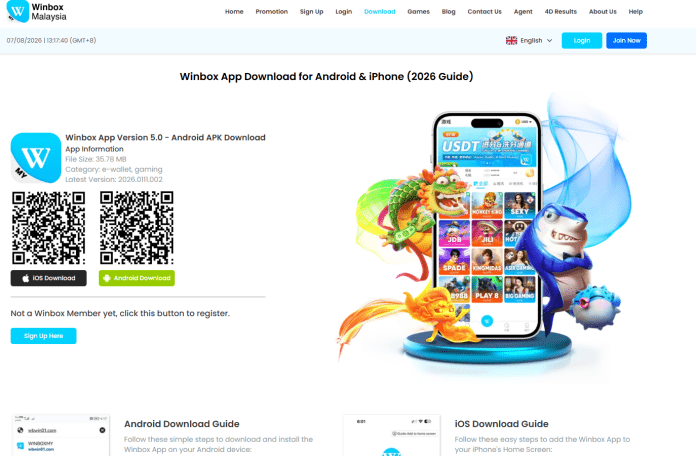
Installing a mobile gaming app can look straightforward: find the download button, install the file, sign in, and start using the platform. In practice, that approach skips several checks that become especially important when an app involves account credentials, personal information, deposits, withdrawals, or real-money gaming.
Players considering a Winbox app download should therefore look beyond whether the installation file simply works. The source of the file, device compatibility, requested permissions, account security, storage requirements, and available browser alternatives can all affect the experience.
A few minutes spent checking these details before installation can prevent considerably more inconvenience later. Here are 11 checks worth making before installing the app.
1. Confirm That the Download Comes From the Intended Website
The first question is not whether the file downloads successfully. It is whether the download page is the one you intended to use.
Gaming brands can have multiple domains, mobile pages, language-specific sections, login portals, and campaign landing pages. Similar-looking domain names also make it easier for users to click the wrong result.
Before downloading anything, check:
- The spelling of the domain
- Whether HTTPS is being used
- Whether the page matches the platform you intended to visit
- Whether navigation, support information, and account links appear consistent
- Whether you reached the site through an unexpected redirect
This is particularly important with Android APK files because they may be distributed directly rather than exclusively through an app marketplace.
A familiar logo alone is not sufficient evidence that a file is legitimate.
2. Identify What Type of Installation You Are Getting
Download the app” can refer to different installation methods.
Android users may encounter an APK file, while iPhone users may be directed toward another installation process. In other cases, the mobile platform may provide an H5 or browser-based version instead of requiring local installation.
Understanding the distinction matters because each option has a different security and maintenance model.
An APK is an Android application package installed onto the device. A browser-based platform runs primarily through the mobile browser. An iOS installation may also involve Apple-specific verification steps depending on how the software is distributed.
Do not follow installation instructions designed for a different operating system merely because the page looks similar.
3. Check Your Operating System and Device Compatibility
Before installing, verify that your phone can actually run the current application version.
Compatibility problems can lead to failed installations, crashes, unusually high battery use, broken interface elements, or features that do not function correctly.
Players should check:
- Android or iOS version requirements
- Available storage
- Device architecture where relevant
- Whether the app supports the particular phone or tablet
- Whether a system update is required
An older phone may technically install an application while still delivering poor performance.
Compatibility also changes over time as application developers update software frameworks and stop supporting older operating systems. Checking requirements before downloading is much easier than troubleshooting an app that was never designed for your device.
4. Keep Android Security Scanning Enabled
Android users installing apps should pay attention to Google Play Protect rather than automatically disabling security warnings to complete an installation.
If Android displays a security warning, read it carefully.
A warning should not be treated as an annoying installation obstacle that must always be bypassed. Determine what the warning means and whether you are confident about the application source before proceeding.
Players should be particularly cautious if installation instructions tell them to permanently switch off device security protections.
5. Review the Permissions Before Granting Them
Mobile applications need permissions to perform certain functions. The important question is whether those permissions make sense for what the application does.
A gaming platform may reasonably require access associated with notifications, network connectivity, file handling, or other operational features. Requests for unrelated sensitive permissions deserve more scrutiny.
Look carefully at requests involving:
- Contacts
- Microphone
- Camera
- Precise location
- SMS access
- Phone call information
- Photos and files
6. Verify the Download Route With the Platform When Necessary
Sometimes the biggest risk is not the app itself but uncertainty over where the installation file came from.
If the link arrived through a message, advertisement, social-media account, referral conversation, or third party, compare it with the platform’s published download route before installing anything.
This is also relevant when dealing with an affiliate or Winbox agent, because a referral relationship and the technical authenticity of an installation file are two different things. Users should still verify the final download destination independently before allowing software onto their device.
The same principle applies to QR codes. A QR code is simply another method of directing a browser to a URL. Users should check the resulting address instead of assuming the code is trustworthy because it appeared alongside familiar branding.
7. Check the File and Version Information
Before installing an APK, look for basic information about the file.
Useful details may include:
- Application version
- Release or update date
- File size
- Platform requirements
- Developer or publisher information
- Installation instructions
The information should be reasonably consistent across the download page and the installed application.
Unexpected discrepancies are worth investigating. For example, if a download page refers to a recent version but the installation package identifies itself as a significantly older release, users should confirm that they have received the intended file.
Version awareness also matters after installation because outdated applications may eventually lose compatibility or miss important security fixes.
8. Make Sure You Have Enough Storage and a Stable Connection
Installation requires more space than many users expect.
The downloaded package occupies storage, but installation may require additional temporary space. Once installed, the application can also accumulate cached files, updates, images, and other data.
Check available storage before downloading rather than attempting to install with a nearly full device.
A stable network connection is equally useful. Interrupted downloads can create incomplete files or force users to restart the process.
When mobile data is limited, Wi-Fi can also prevent an unexpectedly large application or update from consuming a substantial portion of the user’s data allowance.
9. Understand iPhone Trust Prompts Before Accepting Them
iOS users may encounter a different installation experience from Android users, particularly when software is distributed outside the conventional consumer App Store process.
Apple explains that manually installed enterprise applications can require the user to establish trust for the developer before the app will open. Apple’s documentation also notes that enterprise distribution is intended for proprietary applications used internally by organisations.
That makes an iPhone trust prompt something to understand, not something to approve automatically.
Before changing device-management or trust settings, users should know:
- Which developer is being trusted
- Why the installation requires that step
- Whether the instructions came from the expected source
- What profile or application is being authorised
If the information displayed on the iPhone differs from what the download page says, stop and investigate.
10. Check Whether H5 or Browser Access Is a Better Option
Installing an application is not always necessary.
Platforms that provide H5 or mobile-browser access allow users to open the service through Safari, Chrome, or another compatible browser without maintaining a separate locally installed application.
That can be useful for users who:
- Have limited device storage
- Prefer not to install APK files
- Switch between several devices
- Rarely use the platform
- Encounter compatibility problems with an app
- Prefer browser-based access
There are trade-offs. Native apps may offer smoother notifications, faster access, or tighter mobile integration, while browser versions can reduce installation requirements.
The better option therefore depends on the user’s device and preferences rather than an assumption that downloading an app is automatically superior.
11. Secure the Account Before Using the App for Transactions
Installation is only one part of mobile security. Account protection matters just as much once the application opens.
Use a unique password rather than recycling credentials from email, social media, banking, or other gaming accounts.
Where additional account-security options are provided, enable them.
Players should also be cautious about:
- Sharing login credentials.
- Saving passwords on shared devices.
- Logging in through public Wi-Fi.
- Responding to unsolicited password-reset messages.
- Sending verification codes to another person.
- Allowing someone to remotely control the phone.
- Following deposit instructions received from an unverified account.
A Simple Pre-Download Checklist
Before pressing install, players can reduce the process to a quick final review:
| Check | What to Confirm |
|---|---|
| Website | Domain and page are the intended ones |
| Device | Operating system is supported |
| File | Version and file details look consistent |
| Security | Device protections remain active |
| Permissions | Requested access makes sense |
| Source | Referral or download route is verified |
| Storage | Enough free space is available |
| Connection | Download can complete reliably |
| iOS trust | Developer information is understood |
| Alternative | Browser/H5 access has been considered |
| Account | Login credentials are properly protected |
Final Thoughts
A Winbox app download should be approached in the same way as any other mobile application that handles accounts and potentially sensitive information: verify first, install second.
The most important checks are straightforward. Confirm the source, understand the installation method, keep device security active, review permissions, check compatibility, and protect the account after installation. Android and iOS also handle externally distributed applications differently, so users should follow the security model of their own operating system rather than copying instructions designed for another device.