

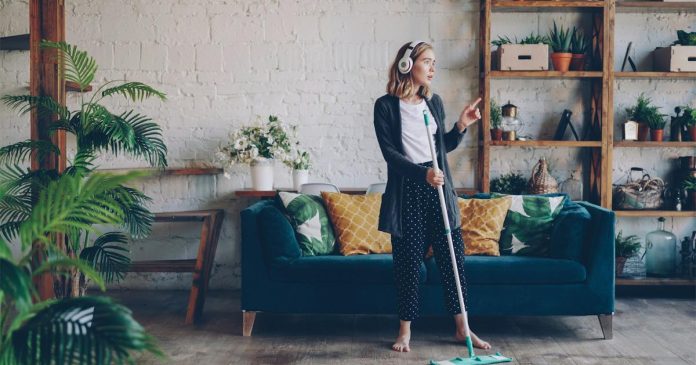
The hour before people arrive gets spent on the wrong jobs. Vacuum the lines in the carpet. A wiped-down cabinet nobody is ever going to open. Meanwhile, the hallway is still lit like a dental surgery, the coffee table is carrying three weeks of mail, and a guest walking through the door has nowhere to put their coat.
First impressions of a house form fast, and almost none of that has to do with baseboards. It comes down to light, smell, temperature, and whether there is a clear place to set down what you’re holding. Those four are also the cheapest parts of a home to change, which is lucky, because they are also the ones people skip.
A guest-ready home is mostly five fixes: a clear entryway, warmer light, one genuinely empty surface, a reset bathroom, and air that has been sorted before anyone knocks. None of them need a contractor. Done in the order below, starting at the front door and working inward, the whole thing takes somewhere between ninety minutes and a lazy afternoon.
Start With the Entryway, Not the Living Room
The first eight feet of a house take more traffic than any other part of it. It is also the part that never gets a plan.
Keys land there. Shoes come off there. Mail piles up because an entry is a landing zone whether or not anyone designed it as one. Fixing that takes three decisions, not a redesign. Clear enough floor for four pairs of shoes, not two.
Put a hook or a small tray within arm’s reach of the door so arriving guests have somewhere to offload. Then deal with the light, because a single overhead fixture in a narrow hall throws hard shadows straight down and makes everyone look tired before they have taken their jacket off.
A plug-in lamp on a timer solves most of that for well under fifty dollars. Set it to switch on an hour before sunset, and the entry stops being a corridor. The timer does more work than the lamp, because a lamp you have to remember to turn on will be off when the doorbell rings.
Fix the Lighting Before You Fix Anything Else
Change one thing, change the light. A room lit by a single ceiling fixture reads as flat no matter how good the furniture is, and no amount of tidying compensates.
The standard fix is layering: three sources doing three jobs. Ambient light for general visibility, task light for reading and cooking, and accent light aimed at something worth looking at. The working rule among lighting designers for that third layer is roughly three times the brightness of the surrounding ambient light at the point of focus. Any less, and the eye doesn’t register it as a focal point. Any more, and your living room has a spotlight in it.

Color temperature does the heavier lifting, and it is measured in Kelvin. A working guide for American homes:
- 2700K to 3000K (warm white) for living rooms, dining rooms, bedrooms, and hallways. This range flatters skin tones and makes evening rooms feel settled.
- 3000K to 4000K (neutral) for kitchens and bathrooms, where you need to see what you are actually doing.
- 5000K and up (daylight) for garages and workshops. In a room where people sit and talk, it reads as clinical.
- Keep rooms that share a sightline close in Kelvin, within about 500K of each other. A 2700K lamp next to a 5000K ceiling light makes it look like one is broken.
Dimmers are the other half of the answer, and they cost almost nothing next to replacing fixtures. Dropping a room by half at eight in the evening changes its whole character without moving a single object.
The National Fire Protection Association says there are nearly 5,900 U.S. home structure fires a year in which candles provide the heat source, and more than half of those fires begin because something flammable was placed too close to the flame. Curtains, bedding, and decorations are repeat offenders. And the worst time to rely on an open flame for atmosphere is the hosting season.
A permanent low-glow source does the same job, and never moves. Usually, wall-mounted LED pieces, like custom neon signs, run on a low-voltage adapter, stay cool to the touch, and can be dimmed to any level the room desires.
The practical argument for one in an apartment is that a floor lamp costs you a couple of square feet you don’t have, but these mount flat to the wall and take up no floor or surface space. Placement matters, but so does tone. 2700K bulbs are comfortable with warm amber or soft peach; cool blue and bright white will fight everything else in a living room.
The part the product photos leave out: an LED neon piece looks like a coil of gray tubing in daylight. So placement is not just aesthetic. Above a sofa or along a hallway wall works. Directly opposite a south-facing window does not.
There is a running-cost argument too. The U.S. Department of Energy estimates that lighting accounts for around 15 percent of an average home’s electricity use, with the average household saving roughly $225 a year by switching to LED.
Residential LED products, particularly ENERGY STAR rated ones, use at least 75 percent less energy and last up to 25 times longer than incandescent equivalents. Leaving a small accent light on through an evening barely registers on a bill.
Clear One Surface Completely Instead of Tidying Five
Partial tidying reads as clutter. A coffee table with four things on it looks worse than one with twelve, because twelve reads as deliberate and four reads as abandoned.
Pick the surface guests will stand nearest, usually a kitchen island, a dining table, or the coffee table, and take everything off it. Not most things. Everything. Put back at most two objects, then wipe it down. Put the rest in a basket or a spare room with the door shut, and deal with it on Sunday.
That space also gives arriving guests a place to set down a bottle or the dish they brought, removing that little bit of awkwardness when someone is standing in a kitchen with a casserole, looking for a free square foot.
Give the Guest Bathroom Ten Focused Minutes
Guests notice bathrooms. What they notice is supplies more than cleanliness, and even a spotless bathroom with an empty soap dispenser still fails.
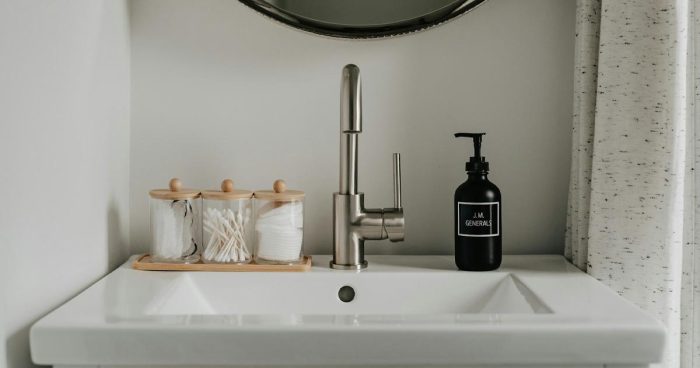
A ten-minute reset covers it:
- A dry hand towel that is visibly for guests, hung where they will find it
- Soap that is more than a quarter full
- A spare toilet roll somewhere obvious, not under the sink behind the cleaning products
- An emptied bin
- A wiped mirror and faucet, which is where water spots show up first
Lighting matters here too, in the opposite direction. Bathrooms are one of the few rooms where a slightly cooler bulb earns its place, since 3000K to 4000K renders color accurately enough for anyone checking their face on the way back out. If your hallway runs at 2700K, stay on the warmer end of that bathroom range so the transition doesn’t jolt.
Set the Air an Hour Before Anyone Arrives
Changing the temperature costs nothing and takes no labor. It still tends to get handled last, which is the wrong order.
A room with eight people in it runs warmer than the same room empty. Body heat, cooking, and closed doors add up, and a thermostat set to your normal comfort level will start feeling stuffy not long after the first arrivals sit down. Drop it two or three degrees below your usual setting before guests arrive, not after. Catching up on a room that has already overheated takes far longer than staying ahead of it.
Air is the other half. Open a window for ten minutes while you are getting ready, even in winter, even if it is only five. Moving air resets a room faster than any spray, and it doesn’t layer a synthetic scent over whatever was there before. If you want a scent, keep it to one room and keep it faint. Strong fragrance in an entryway is the fastest way to make a house smell like it is covering something up.
Both of those need doing roughly an hour out, on a timer in your head. That is the real trick to the whole list. The room should feel right before the first coat comes off, not while you are still adjusting things around people who are already sitting down.