

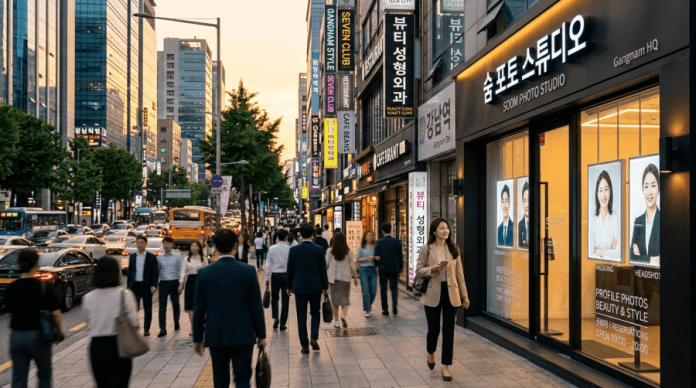
South Korea takes photographs seriously in a way most Western professionals have never considered.
Not as a hobby. Not as an occasional necessity. As a daily, almost ritualized act of self-presentation that carries real social and professional weight. And somewhere between the rise of K-dramas on global streaming platforms, the worldwide expansion of K-beauty, and the explosion of Korean-style photo booths in cities from Tokyo to Toronto, that sensibility started leaking into how professionals everywhere think about their own image.
The influence is more significant than most people realize, and it’s actively reshaping what a “good” professional headshot means in 2025.
South Korea Treats Visual Presentation as a Skill, Not a Vanity
To understand why Korean photo culture travels so well, you have to understand what it’s built on.
In South Korea, having a polished, current, high-quality photograph of yourself is not considered self-absorbed. It’s considered professional literacy. Job applications routinely include photographs. Professional directories expect them. Even casual professional introductions assume a level of visual self-awareness that would feel unusual in, say, a mid-sized American company where half the team has a grainy LinkedIn photo from a wedding three years ago.
This has produced something genuinely interesting: a cultural infrastructure around looking good in photographs. Korea has some of the highest concentrations of professional photo studios per capita in the world. Korean photo booths (the “film photo” aesthetic popularized by brands like Life4Cuts and Photoism) have become a global cultural export. Korean makeup and skincare routines include specific steps oriented around how skin reads on camera.
Here’s what most people miss: this isn’t about vanity. It’s about competence signaling. In Korean professional culture, a well-maintained visual identity communicates that you’re organized, current, and take your professional presence seriously. A dated or low-quality photo communicates the opposite, regardless of what’s on your resume.
That framing is now spreading, and professionals in other markets are starting to internalize it, often without realizing where the shift came from.
The Aesthetic That Crossed Borders (And Why It Works)
K-drama production values are extraordinary, and anyone who has watched even a few episodes of a popular Korean series understands this intuitively. The lighting is deliberate. The skin tones are carefully managed. Every frame feels considered in a way that Hollywood productions often don’t match, even with larger budgets.
That visual standard has had a genuine effect on global audiences. People who grew up watching poorly lit procedural dramas on network television have now spent hundreds of hours with Korean content that treats visual quality as a basic expectation, not a luxury. Their eye has been trained, even if they couldn’t articulate it.
The result is a noticeable shift in what professionals consider “acceptable” in their own photographs.
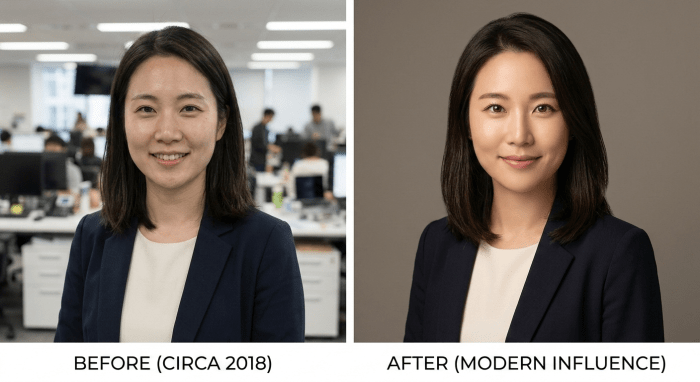
A headshot that would have passed without comment five years ago, flat lighting, slight blur, a background that competes with the subject, now reads as clearly substandard to a larger portion of the population than it used to. The aesthetic baseline moved. Korean content (among other influences) moved it.
This matters practically. When a recruiter, a potential client, or a conference organizer looks at your professional photo, they’re making a judgment call against an internal standard of “this looks professional.” That standard has been calibrated upward. The photo that used to clear the bar may no longer clear it.
Seeing what strong professional headshots actually look like is a useful exercise precisely because most people’s reference point for their own photo is their own photo. Comparing against current best practices often produces an uncomfortable but useful recalibration.
How AI Closed the Gap Between Aspiration and Reality
Here’s the thing nobody mentions when discussing the globalization of Korean visual aesthetics: the standards traveled faster than the infrastructure to meet them.
Korean photo studios in Seoul are exceptional. Trained photographers who specialize in professional portraits, lighting setups designed for skin tone accuracy, retouching pipelines built for professional output. The average professional outside of a major global city has no equivalent access. They have a local photographer who may or may not specialize in headshots, a limited budget, and limited time.
AI headshot technology arrived at precisely the right moment to bridge that gap.
The same neural networks that produce high-quality output from reference photos are, in a meaningful sense, trained on the kind of careful, controlled photography that Korean studios have long excelled at. Controlled lighting. Clean backgrounds. Flattering but natural skin rendering. Consistent framing that puts the subject in context without distraction.
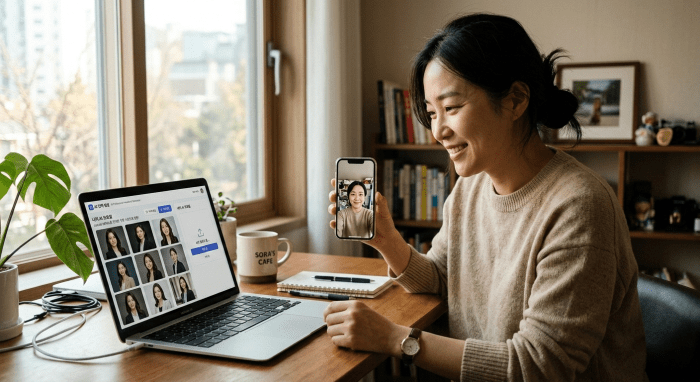
Platforms like Headshot Photo have made it possible for a professional anywhere in the world to get output that meets the elevated visual standard that global media consumption has created, without flying to Seoul or paying for a studio session in a major city. You upload reference photos from your phone. You receive headshots that reflect the visual quality the market now expects.
This is not a small thing. Access to quality visual presentation used to be geographically and economically unequal in ways that produced compounding disadvantages. AI is flattening that inequality faster than any other tool the photography industry has produced.
The Practical Lessons Worth Taking From Korean Photo Culture
The influence of Korean visual culture on professional headshots isn’t just aesthetic. There are operational lessons that translate directly into how you should think about your own professional image.
Treat your headshot as a current document, not a permanent one. Korean professionals update their photos regularly, not as a vanity exercise but because they understand that a photo more than 18 months old may no longer accurately represent them. This is a sensible standard. You’ve changed. Your role may have changed. Your audience’s expectations have definitely changed.
Invest in the photograph before the wardrobe. Korean photo culture places enormous emphasis on lighting and technical quality. A well-lit photo in a simple outfit consistently outperforms a poorly lit photo in expensive clothes. The technical execution matters more than the styling choices, within reasonable limits.
Think about context before you shoot. Korean professional photos vary intentionally by purpose. A photo for a formal company directory looks different from a profile photo for a personal brand. This isn’t inconsistency; it’s audience awareness. The photo you use when speaking at a conference should signal something slightly different from the one on your law firm’s website.

For professionals applying this thinking practically, it helps to have multiple headshots rather than a single image deployed everywhere. Exploring what a full personal headshot library can look like across different looks and contexts is a good starting point for thinking about visual identity as a system rather than a checkbox.
Start with your LinkedIn photo, since that’s the highest-traffic, highest-stakes context for most professionals. Get the fundamentals right: clean background, good lighting, direct eye contact, an expression that reads as confident without being stiff. Then build outward from there based on where else your image appears.
The Standard You’re Being Judged Against Has Changed
Global media consumption has always influenced aesthetic standards. Hollywood shaped how professional Americans dressed in the mid-twentieth century. European fashion photography shaped what aspirational imagery looked like in the 1980s.
Korean content is doing the same thing right now, and professional photography is one of the places the influence is most visible.
The professionals who notice this early and adjust their visual identity accordingly will benefit from the same asymmetry that applies to any standard that’s rising: the people who clear the new bar look significantly better than those still calibrated to the old one, even if neither group has consciously registered that the bar moved.
Visual competence used to be optional. It is increasingly the baseline expectation in any professional context where someone can look you up before they meet you. That is now almost every professional context that matters.
The world learned to see better. The only real question is whether your headshot has kept pace.