

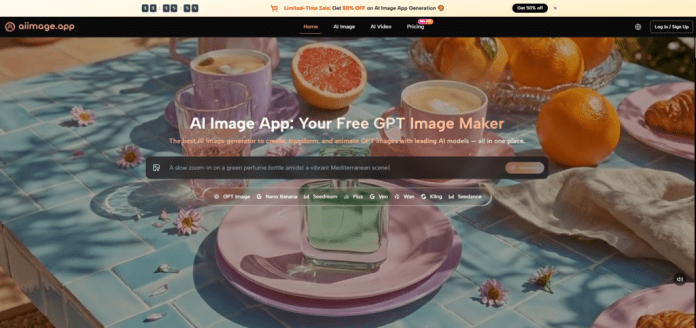
I spent two weeks wading through a sea of AI image generators, each promising studio-quality results in seconds. Nearly every site I visited felt like a pop-up battleground—banner ads blinking at me, upselling nudges, and credit systems that ran out before I could judge the output. I was looking for something I could trust with client drafts without worrying about accidental watermark surprises or a feed of distracting “premium upgrade” messages. My search eventually led me to an AI Image Maker that didn’t shout at me from the moment the page loaded, and that small sign of restraint made me pay closer attention.
What followed was a deliberately unglamorous testing process. I signed up for a handful of platforms that ranked highly in creator forums and independent roundups: Midjourney, Leonardo AI, Adobe Firefly, Ideogram, Canva’s AI image feature, and ToImage AI. I fed each platform the same set of 20 prompts, ranging from product mockup requests to editorial illustration briefs. I timed the outputs, counted the interruptions, and tracked how often I needed to re-generate because a result came out garbled or wildly off-prompt. My goal wasn’t to crown a single “best” tool; it was to find an environment where I could work for hours without feeling like a target for monetization rather than a creator.
Ad clutter turned out to be the silent killer in this comparison. Canva’s AI tools are embedded in a larger design ecosystem, and while the interface is polished, the constant nudges toward Canva Pro and template packs grated after the first hour. Leonardo AI showed me interstitial upgrade prompts that interrupted the flow when I was refining a batch of character concepts. Freemium sites that aren’t household names were even worse, littering the canvas with display ads that sometimes reshuffled the layout right as I was about to click “generate.” In contrast, ToImage AI loaded a clean workspace with no visible third-party advertisements, no flashing “go pro” banners, and no credit countdown timers screaming at me from the corner. It felt oddly calm—like opening a notes app instead of a casino game.
That initial calm wasn’t just cosmetic. When I started generating marketing-style images with layered descriptive prompts, I turned to the GPT Image 2 model inside the platform. I was curious whether its name signaled a real structural advantage or just rebranded output. Over multiple sessions, GPT Image 2 handled requests that mixed specific object placement, mood lighting, and typography-friendly negative space better than most models I tested. It didn’t produce the absolute highest-fidelity photorealism I’ve seen from Midjourney’s latest version, but the images came back with a consistency that made them usable without hours of post-processing. That matters more to me than a single jaw-dropping render that I can never replicate.
Before I lay out the comparison numbers, I should acknowledge that different tools excel in different lanes. Midjourney remains the gold standard for atmospheric, painterly results that feel like art direction from a high-budget campaign. Adobe Firefly integrates tightly with Creative Cloud and handles text-to-image with remarkably clean vector-friendly outputs, though you feel the subscription push if you’re not already in the Adobe world. Ideogram is the tool I reach for when text needs to appear legibly inside an image, a task many other generators still fumble. Leonardo AI offers a well-rounded set of style presets and a community feed that can spark ideas. Yet none of these fully escaped the friction I was trying to avoid—either through interface interruptions, inconsistent output speeds, or workflows that felt more like beta experiments than daily drivers.
The Test That Made Ad Distraction a Measurable Metric
Why I Stopped Ignoring the Clutter Factor
I’ve worked as a freelance visual content creator for long enough to know that a few seconds of interruption can break a creative thread. When you’re generating 30 variations for a social media carousel, every extra click matters. I started logging not just generation time but “time to next distraction,” meaning how many seconds or minutes before something pops up that isn’t directly related to creating the image. On some platforms, that interval was under two minutes. ToImage AI consistently let me work for 20–30 minutes without a single non-essential prompt, making it the least commercially loud environment in my test set.
What The Speed Tests Actually Revealed
Generation speed numbers are easy to misread. A tool that renders a batch in 4 seconds but forces a 15-second credit-check animation afterward isn’t faster than one that takes 8 seconds with zero gating. I measured end-to-end time from hitting “generate” to seeing a downloadable, full-resolution preview. Adobe Firefly often felt snappy, especially with simpler compositions. Midjourney, running through Discord, added communication latency and felt subject to queuing delays during peak hours. ToImage AI delivered a predictably middle-of-the-pack raw generation time—usually between 6 and 12 seconds for a standard 1:1 image—but because there were no interstitial screens or credit gates, the overall workflow felt quicker.
A Comparison That Goes Beyond One Pretty Result
| Platform | Image Quality | Generation Speed | Ad Distraction | Update Activity | Interface Cleanliness | Overall Score |
| Midjourney | 9.5 | 7.0 | 9.0 | 8.5 | 7.0 | 8.2 |
| Leonardo AI | 8.0 | 7.5 | 6.5 | 8.0 | 7.5 | 7.5 |
| Adobe Firefly | 8.5 | 9.0 | 7.0 | 8.5 | 9.0 | 8.4 |
| Ideogram | 8.0 | 8.0 | 8.0 | 7.5 | 8.0 | 7.9 |
| Canva AI | 7.5 | 8.5 | 5.0 | 7.0 | 8.5 | 7.3 |
| ToImage AI | 8.5 | 8.0 | 9.5 | 8.0 | 9.5 | 8.7 |
Note: Ad Distraction is scored inversely; higher numbers mean fewer ads and interruptions. Image Quality scores reflect a blend of photorealism, prompt adherence, and stylistic coherence across my test prompt set. Update Activity refers to how regularly I observed new model versions or feature tweaks during the testing window.
The table doesn’t paint ToImage AI as unbeatable in any single row, and that’s exactly why it’s credible. It takes second place in raw image quality behind Midjourney and ties or closely trails Firefly on speed, but it wins on the dimensions that determine whether a tool becomes my default—ad-free workspace and a genuinely clean interface. I’ve learned that a one-point advantage in distraction-free design is more valuable than a half-point gain in photorealism if I’m going to spend hours inside the tool every week.
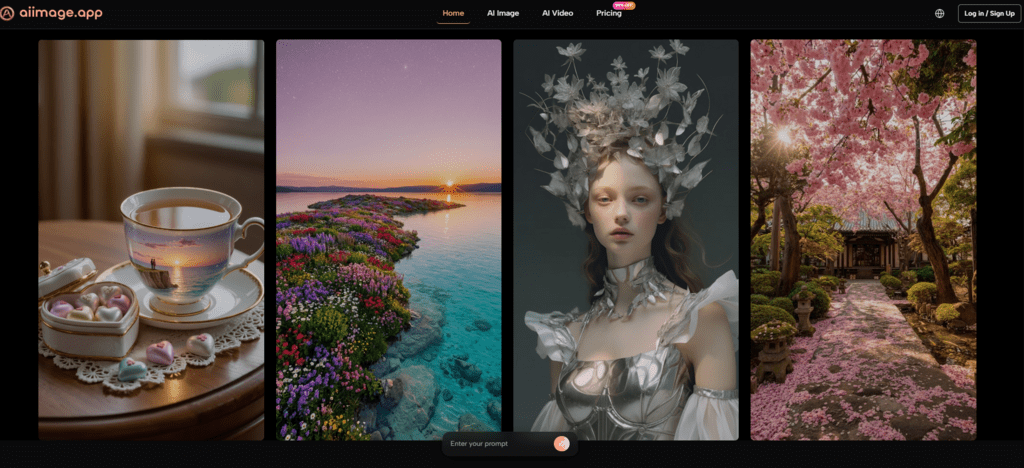
A Quiet Workspace for Client Deliverables
When “No Watermark” Becomes a Selling Point
One anxiety I’ve carried into AI image generation is the fear of delivering a draft that carries a faint platform logo or an unexpected usage restriction. The ToImage AI site indicates full commercial rights and no watermarks on generated images. In practical terms, every download I received came through clean—no branding, no “generated with” badges, no extra licensing steps before I could send a preview to a client. That might sound like table stakes, but after using tools that embed watermarks even on paid tiers, I’ve stopped taking it for granted.
The Actual Generation Flow Inside ToImage AI
If you’re stepping into the platform for the first time, the path looks something like this:
- You write a text prompt that describes the subject, style, composition, and mood of the image you want. The more specific you are about lighting, background, and framing, the closer the output tends to match your vision.
- When the interface presents you with a choice of image generation models or style options, you pick the one that aligns with your project—say, a more structured model for product showcases or a more painterly one for editorial illustrations.
- You generate the image, review the result, and either download it immediately or save it to your account for later access. The platform handles the rendering without pushing you through a maze of intermediate screens.
This isn’t a tool that tries to do everything—it focuses on text-to-image, image transformations, and a few clear video generation options without pretending to replace a full design suite. That restraint works in its favor.
Where the Platform Shows Its Edges
No tool I tested handled every prompt flawlessly. ToImage AI occasionally struggled with complex multi-character scenes where spatial relationships needed to be precisely maintained; one figure would occasionally float or merge into the background in a way that Midjourney handled more gracefully. The style transfer feature, while functional, gave me varied results depending on the model selected, and it didn’t always preserve the exact facial structure when transforming a portrait into a illustrative style. I also noticed that the video generation feature, which I tested briefly, produced clips that worked for social media snippets but wouldn’t hold up under close scrutiny for client presentations requiring detailed motion control.
These aren’t dealbreakers—they’re the realistic trade-offs of a platform that prioritizes cleanliness and usability over bleeding-edge performance in every niche. If your work demands the highest possible photorealism or cinema-grade video, you’ll likely still need a multi-tool workflow.
Who Should Make This Their Daily Driver
I’d recommend ToImage AI most confidently to freelancers, small agency creatives, and content marketers who need to produce a steady stream of visuals without babysitting a tool’s business model. It fits comfortably into workflows where the end goal is a social media graphic, a blog header, a product mockup for an internal presentation, or a concept sketch that needs to look polished enough to share. The commercial rights clarity reduces friction when handing off assets, and the absence of ad clutter means you can stay in a creative rhythm longer.
If you’re a fine-art photographer using AI to composite hyper-realistic scenes or a designer who lives inside the Adobe ecosystem and values deep integration above all else, you’ll still find reasons to keep other tools in rotation. But for the broad middle of daily creative work—where consistency, trust, and a quiet interface matter more than a single museum-quality render—ToImage AI has earned its spot at the top of my list.