

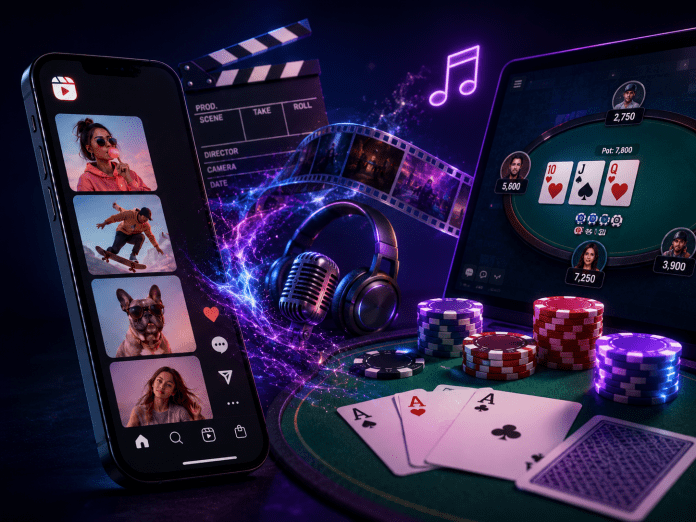
When was the last time you scrolled through YouTube Shorts or even Instagram stories and reels? Not long ago, right? Most likely, today. But that is not the whole picture of modern entertainment.
One surprising trend is the attitude many of us have toward fast content consumption: we do not even consider it entertainment anymore, but rather a viral spiral we need to avoid by unplugging ourselves from endless content. Instead, new frontiers are emerging, where many people are finding fresh forms of interest.
When Interactive Card Play Becomes Its Own Entertainment Circuit
Gaming has been a major force in digital entertainment, and to be honest, it is not entirely because of the internet. Even before it became globally affordable, many people had already found themselves in this hobby through consoles, game cartridges, and similar formats. The internet, however, expanded gaming libraries many times over, turning even offline activities into digital gaming hits. Poker, for example, became a new form of community building. That’s right: unlike average card games like Solitaire, poker showed people that they could compete as if they were in a casino, involving money, later crypto, and so on.
Looking closely, modern poker sites and gaming platforms turned card play into a session-based form of leisure that could fit several audience needs at once. For some people, it was an active night in, with real attention paid to decisions, position, stack depth, and table rhythm. For others, it worked more like event viewing.
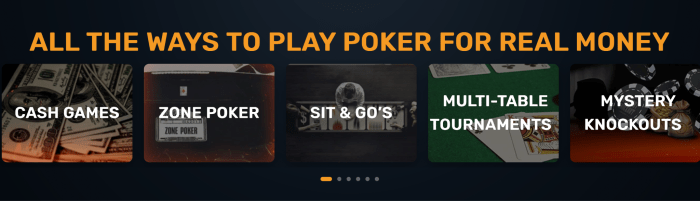
How online poker started to rival live sports culture
This pushed the boundaries even further, as online tournaments began to rival sports events in popularity and, at some point, even attracted a more serious fan base. In sports, you will almost always remain part of the audience, but poker turned many casual players into professionals and opened the doors to digital competition.
The rise of online poker also borrowed heavily from live entertainment culture. Major tournaments created recognizable moments, recurring storylines, and players worth following over time. Around that, community chat servers, voice rooms, and hand-review groups helped turn the game into a social habit, not just a private one. People could play, watch, react, and break down key hands in the same evening. That blend of competition and commentary gave the format a wider pull.
Poker still sits between watching and doing
A strong poker website also sits in the useful middle ground between watching and doing. Someone can study one table, play another, and talk through decisions with friends in real time. That hybrid is a big reason online poker still stands apart from the feed. It offers suspense without requiring spectacle every second, and community without flattening everything into a clip.
Entertainment Time Is Splitting by Mood, Not Disappearing
The bigger pattern is not that feed-based media is weak. It is that it serves only one part of the day. People still divide their leisure by mood and setting. Fast scrolling works when attention is thin. Games work when people want agency. Music works when they want a repeatable atmosphere. Going out still matters when they want a sense of occasion. That mix is why entertainment keeps branching instead of collapsing into one habit.
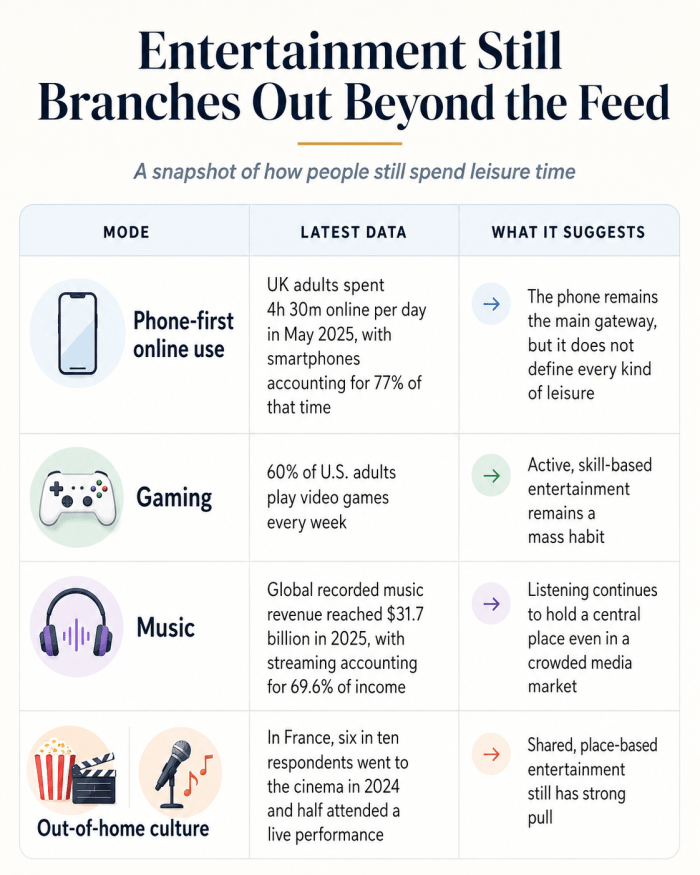
The Next Shift Is Toward Mixed Habits, Not One-Screen Habits
The next branch in entertainment is not a rejection of digital media. It is a move toward mixed behavior. Discovery may begin in short clips, but people often continue elsewhere, on a television, through headphones, inside a game, or in a venue. That change is already visible in video.
Music shows the same branching logic in a different form. Frances Moore, a chief executive in the industry, said fans are “seizing the opportunities to listen to more music in more ways than they have ever done before.” In fact, a music study found that 79% of people think there are more ways to listen than ever before, and that people now use more than seven methods on average to engage with music. So, the strongest entertainment formats will not be the ones that copy the feed most closely. They will be the ones that turn discovery into ritual, ritual into community, and community into repeat visits across devices and settings.
Instead of flattening into scrolling entertainment spread into sessions, scenes, and shared rituals, which is why the most durable alternatives to the feed keep giving people a real reason to stay.