

Nobody Talks About the People Who Built the Sky
There’s a specific kind of rewatch that happens with certain shows. Not the kind where someone wants to see the ending again – the kind where they’re squinting at the background. Pausing on a wide shot. Trying to figure out what’s real.
Squid Game has that effect. So does Demon Slayer. So does Parasite, albeit in a quieter way – a film that feels almost aggressively un-cinematic, grounded, handheld and close, until someone mentions that the house isn’t real. That the neighborhood isn’t real. That a significant chunk of what Bong Joon-ho put on screen was built after the cameras stopped rolling, pixel by pixel, by artists most viewers have never heard of.
That gap – between what the audience experiences and what actually exists – is where visual effects live. And right now, some of the most interesting work in that space is coming out of Asia.
A Number Worth Sitting With
South Korea’s VFX market hit USD 203 million in 2024. By 2033, IMARC Group projects it will reach USD 391 million – nearly double, at a compound annual growth rate of 6.77%. Meanwhile, Korean film and TV exports reached KRW 1.8 trillion (roughly $1.2 billion) in 2024, according to Variety citing MPA research. That’s almost double what it was in 2019. It now exceeds Korea’s exports of beverages, spirits, and railway locomotives.
Railway locomotives. Let that land for a second.
The Asia-Pacific animation and VFX market as a whole is projected to reach USD 346 billion by 2030, expanding at over 12% annually. Netflix, Disney+, iQIYI – they’re all pouring money into Korean and Japanese originals because the audience is there, and the audience wants to be impressed. Which means someone has to do the impressing. A lot of ‘someones’.
What Squid Game Actually Looked Like Before Post
Walk through what Gulliver Studios – the Korean VFX company behind Squid Game – actually had to do on that show, and the scope of it starts to feel almost absurd.
The game arenas: partially physical, partially extended with green and blue screen compositing. Those walls, that sky – built. The Glass Bridge? The illusion of it hanging 50 meters in the air was constructed through photogrammetry scanning of the physical set, then digitally extended in post. When Squid Game: The Challenge (the unscripted version) came along, the team was managing footage from over 20 simultaneous cameras. Facial replacement – one of the most technically unforgiving processes in VFX – became a necessary part of the pipeline.
What audiences saw was layered: physical construction underneath, digital imagery on top, lighting and color grading sealing it all together until it looks like one real thing. Gulliver won the 2022 Primetime Emmy for Outstanding Special Visual Effects for it. Then Season 2 came. Then more.
Why Demon Slayer Looks Like Nothing Else
Fans of anime have spent years trying to describe what Ufotable does with Demon Slayer: Kimetsu no Yaiba. The fight sequences – those Water Breathing spirals, the Flame Breathing pillars, the Stone Breathing impacts that feel genuinely geological – don’t look like Western CGI. They don’t look like traditional 2D anime either. They look like themselves, which sounds like a non-answer until you understand how the studio actually builds them.
Ufotable works in layers. Characters are drawn and animated the traditional way – hand-keyed 2D. Environments are rendered in 3D. Then compositors spend enormous amounts of time blending the two, smoothing out the seam until it disappears. The breathing technique effects? Those are 2D animation elements painted directly on top of 3D renders, then color-graded into the surrounding imagery frame by frame.
Yuichi Terao, compositing director at Ufotable, has spoken in interviews about the coordination this requires between departments that typically work in parallel, rarely intersecting. At Ufotable, they constantly intersect. The result is a hybrid visual language that carries a specific signature – identifiably Ufotable’s, immediately recognizable – and that signature is a direct product of process, not just aesthetic preference.
The Invisible Stuff
Here’s something worth understanding about high-end VFX: the goal is often to disappear.
Parasite is the best example most people haven’t thought about. The film won South Korea’s first Academy Award for Best Picture in 2020. It’s celebrated for its realism, its intimacy, its refusal to look like a “movie.” What most viewers don’t know is that Dexter Studios – one of South Korea’s largest and most established VFX companies – built the Park family’s house digitally. The driving scenes. The basement. The neighborhood surrounding the Kim family’s apartment. Much of it was constructed or extended in post-production, invisible by design.
Dexter’s leadership put it plainly in a VFX Voice interview: the film is famous for VFX that most viewers never suspected existed – effects created entirely to serve the story rather than announce themselves.
That discipline – using sophisticated tools not to dazzle but to disappear – is its own craft. Dexter has since applied it to Space Sweepers, Gyeongseong Creature, Parasyte: The Grey, Knights of the Zodiac. By mid-2024, the studio employed around 330 people, roughly 200 of them VFX artists.
The Actual Skill Set
Breaking down what goes into building a single visual effects shot – the disciplines involved, not just the job titles:
- 3D modeling and rigging – constructing digital assets (environments, props, characters) and giving them the internal skeleton needed to move convincingly under animation
- Compositing – assembling multiple image layers (live footage, CGI renders, matte paintings, practical elements) into a single cohesive frame
- Motion capture and animation – recording or hand-keying movement, then refining it until it reads as natural rather than mechanical
- Lighting and rendering – simulating how light actually behaves within a 3D scene, then processing it into a final image
- Digital painting and texturing – adding surface detail to 3D models so they hold up at any focal length, in any light
Studios looking to hire in this field – and right now, with the K-drama and anime pipeline expanding hard, there are many of them – want people who can move across more than one of these areas. More importantly, they want people trained in production-realistic workflows, not just software demos. That’s the whole point of programs, like at Vancouver Film School, that focus on Computer Art and 3D animation: the gap between knowing a tool and knowing how to use it on a deadline, with other people, inside a pipeline – that gap is enormous. Formal training is one of the few ways to close it before you’re already on the job.
A single episode of a premium K-drama might have dozens of artists working those disciplines simultaneously. Each handoff matters. Nothing is optional.
Why the Bar Keeps Moving
There’s a feedback loop happening in Korean and Japanese content right now that’s worth naming.
The audience for anime and K-dramas has gotten extremely visually literate. People who’ve watched two hundred hours of Korean drama can tell when a set extension looks off. Anime fans who’ve seen Demon Slayer now compare everything against it. The bar gets raised not just by studios competing with each other – it gets raised by viewers who’ve been trained, without realizing it, to expect more.
South Korea’s government is responding to this seriously. In 2025, the Ministry of Culture announced plans for a $1 billion animation fund, with an initial $140 million commitment and a five-year expansion roadmap. A new cash rebate system for international co-productions was introduced alongside it, designed to bring foreign investment into Korean animation infrastructure. This isn’t cultural enthusiasm – it’s industrial policy.
Japan hasn’t slowed down either. In August 2024, US animation studio Titmouse and Japan’s Polygon Pictures announced a collaboration on CG animated projects for adult and younger audiences – a signal that cross-border production is becoming structural, not occasional.
Final Thoughts
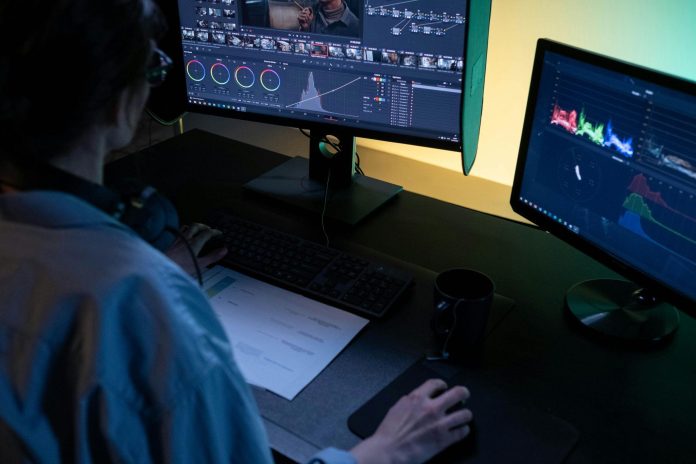
There’s a rendering pass that takes twelve hours, gets reviewed, and gets redone. There’s a lighting tweak made late at night because one shadow reads wrong in a specific frame. There’s a compositor who watches the same four seconds a hundred times, looking for something the director probably won’t consciously notice – but will feel.
That labor is everywhere in the shows and films discussed here. It’s in the Glass Bridge. It’s in the water spirals. It’s in the walls of a house that was never built.
For anyone drawn to that kind of work – who rewinds not for the story but for the frame – the industry has rarely been more open, or more demanding, at the same time. The tools exist. The demand is real. And the standard, set by studios in Seoul and Tokyo, is genuinely high. Worth chasing.